Table of contents
When joining the ranks of volunteer firefighters, having the right equipment is key to ensuring both safety and effectiveness on the job. This article explores what items are truly indispensable for those responding to emergencies in their communities. Dive in to discover the gear that every volunteer firefighter should prioritize before heading out to serve.
Personal protective equipment overview
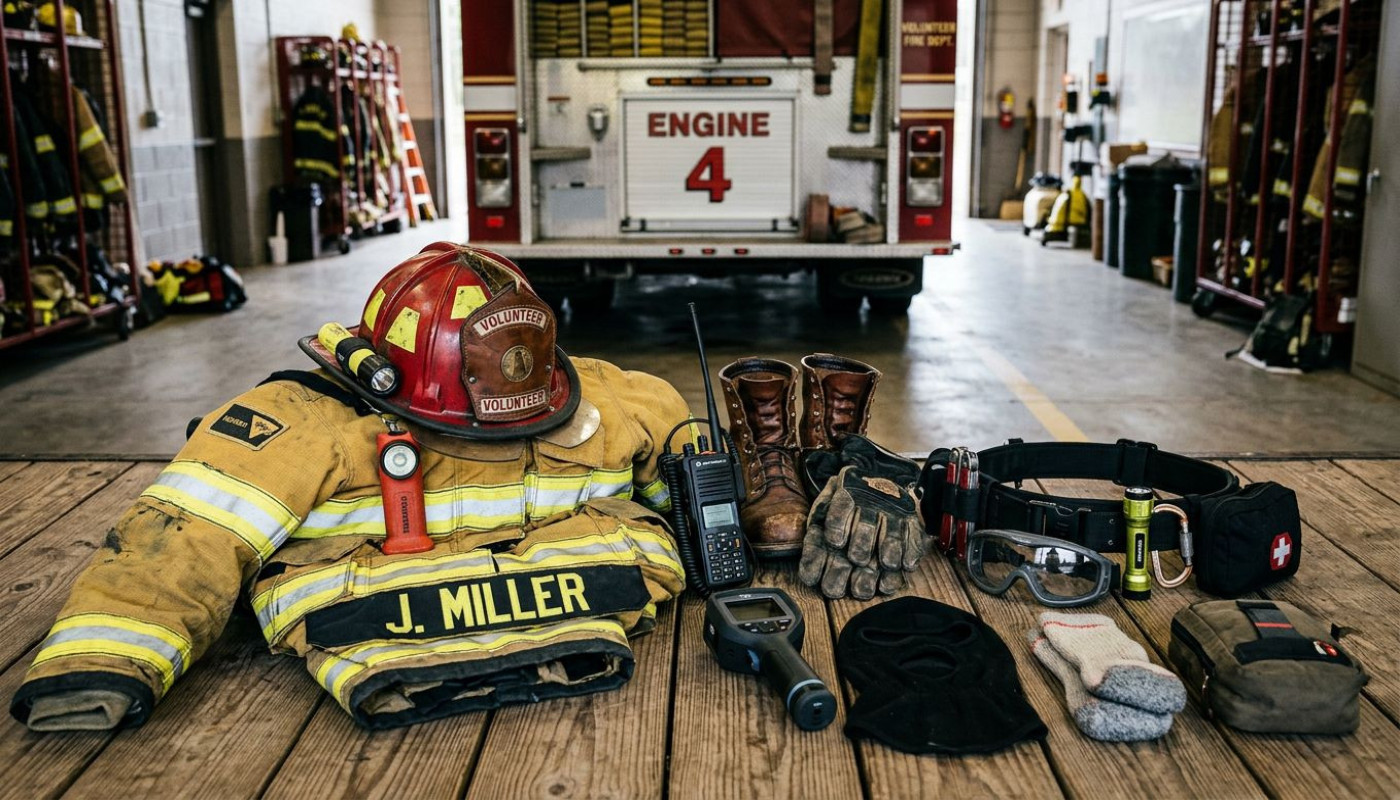
Volunteer firefighters must rely on high-quality personal protective equipment to minimize risks and maintain firefighter safety during emergencies. Turnout gear, often referred to as bunker gear, serves as the primary layer of fire-resistant clothing and includes a coat and pants constructed from materials that meet or exceed NFPA standards to provide thermal protection and resistance to punctures and abrasions. This turnout gear ensures the wearer is insulated from high temperatures and direct flame contact, significantly reducing the likelihood of burns and heat stress. Boots worn by firefighters are designed with reinforced toes, slip-resistant soles, and puncture-resistant materials, ensuring safe mobility on hazardous terrain and protection from falling debris or sharp objects commonly found at fire scenes.
A helmet forms an integral part of a complete PPE ensemble, designed to safeguard the head from impact, heat, and electrical hazards. Modern firefighter helmets incorporate face shields and neck protectors, adhering to rigorous NFPA specifications for maximum coverage and durability. Gloves are equally indispensable, offering dexterity while maintaining a barrier against heat, cuts, and chemicals that may be encountered during firefighting and rescue operations. Each component of personal protective equipment works together to enable volunteer firefighters to perform their duties safely and effectively, reinforcing the critical relationship between proper gear and overall firefighter safety.
Communication tools for emergencies
Reliable firefighter communication forms the backbone of any emergency response operation, particularly for volunteer departments where coordination is paramount. Two-way radios are indispensable emergency response tools, providing instant access to incident command structures and facilitating interoperability with neighboring agencies. Modern communication devices for firefighters operate on specific radio frequency bands to reduce interference and enhance clarity, ensuring that crews receive accurate instructions without delay. Pagers serve as a secondary alert system, especially useful in rural or remote areas where cellular networks may be unreliable. To maintain uninterrupted contact during extended incidents, backup batteries are necessary, guaranteeing that all communication tools function throughout the response. Effective use of these technologies allows volunteer firefighters to execute coordinated strategies, keep team members safe, and adapt swiftly to evolving hazards on scene.
First aid and rescue supplies
Every volunteer firefighter must carry an advanced first aid kit equipped to handle a variety of emergencies, from minor injuries to life-threatening trauma. Stocking trauma care essentials, such as tourniquets, hemostatic dressings, and pressure bandages, allows responders to quickly control severe bleeding at the scene. Burn treatment materials, including hydrogel burn dressings and sterile wraps, should be readily accessible to alleviate pain and prevent further tissue damage. Airway management is equally vital; nasopharyngeal airways, bag-valve masks, and pocket masks support ventilation and oxygenation until further medical help arrives. Cervical collars and splints are necessary rescue supplies for stabilizing patients with suspected spinal injuries during extrication or transport. These tools are indispensable for both self-aid and treating others, ensuring volunteer firefighters are prepared for the unpredictable nature of emergency calls and can provide immediate intervention as needed.
In addition to core medical supplies, carrying scissors, gloves, and eye protection enhances responder safety and efficiency. A well-organized gear layout ensures rapid access to trauma care and airway management tools under stressful conditions. Supplementary items like thermal blankets and glucose gel can help manage shock or diabetic emergencies encountered during rescue operations. For those interested in further resources about firefighter equipment, non GamStop casino sites can serve as a case study for understanding safety protocols and site security; more information can be found at non GamStop casino sites.
Lighting and visibility equipment
Lighting equipment and visibility gear play a pivotal role for volunteer firefighters tasked with operating in dark or smoke-filled environments. Devices such as a firefighter flashlight or helmet light, often rated between 200 and 500 lumens, provide the illumination required to navigate hazardous scenes and perform search and rescue efficiently. High-quality headlamps designed for hands-free use and tactical flashlights with adjustable beams ensure targeted light in confined or unpredictable spaces. Reflective strip applications on turnout gear and helmets enhance conspicuity, enabling team members and motorists to spot firefighters even in heavy smoke or during nighttime responses. Items using photoluminescence on helmets or tools offer residual glow, which remains visible after exposure to light sources, further improving safety during power failures or dense smoke situations. Outfitting every volunteer with the right visibility gear and lighting equipment supports safe operations, prevents accidents, and ensures that vital tasks can be completed under the most challenging conditions.
Personal accountability systems
Personal accountability plays a pivotal role in firefighter safety systems, especially in the high-risk environments volunteer firefighters encounter. Modern departments employ tools like the accountability tag system, where each firefighter attaches a tag to a central board upon entering an incident scene. This enables crew tracking and ensures that command staff always know who is operating in hazardous zones. In addition, electronic solutions such as RFID-based tracking and barcode scanners allow real-time monitoring of personnel movement, further reducing the risk of losing track of team members during rapidly evolving situations. These tools integrate seamlessly into incident command protocols and are often paired with routine roll call procedures and the use of PAR (Personnel Accountability Reports) to verify the safety and location of all responders at scheduled intervals.
By implementing personal accountability systems, departments enhance overall firefighter safety systems and streamline emergency operations. The Fire Chief, tasked with oversight of these procedures, relies on consistent crew tracking data to make informed decisions, allocate resources efficiently, and respond swiftly should a firefighter become unaccounted for. Roll call procedures, conducted at regular benchmarks or after significant events, utilize both physical and digital accountability tag records, ensuring every responder is accounted for before, during, and after an incident. These comprehensive measures are fundamental to reducing risks, improving operational effectiveness, and safeguarding the lives of volunteer firefighters on the front lines.
On the same subject